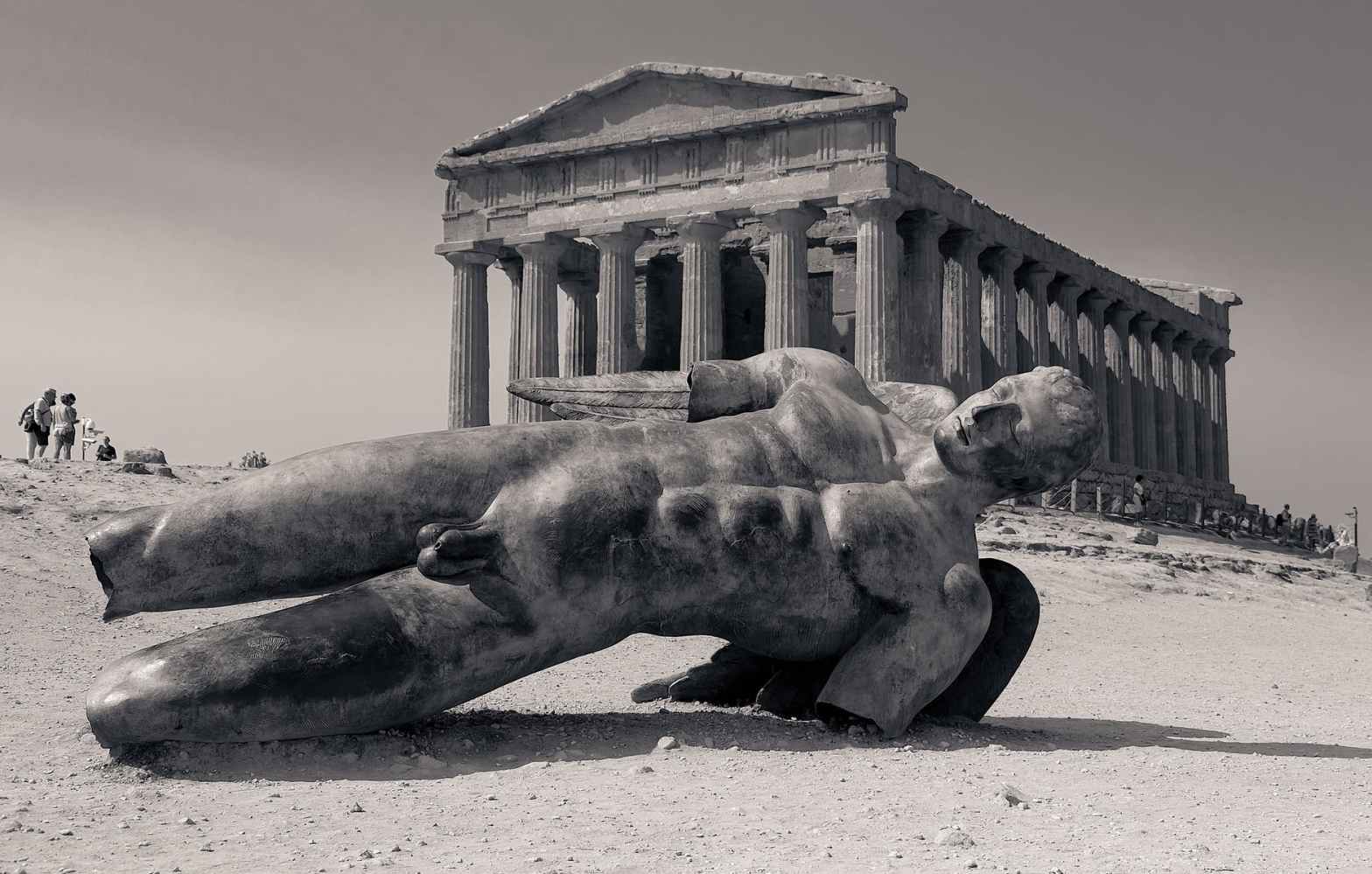
Synopsis: Achilles, “the best of all the Greeks” and Patroclus, an awkward young exiled prince are brought together by chance. They forge an inseparable bond, despite risking the gods’ wrath. Suddenly, Helen of Sparta is kidnapped by Troy. Achilles, seduced by the promise of a glorious destiny and Patroclus torn between love and fear join the cause to return Helen to her rightful polis. However, little do they know that the cruel Fates will test them both as never before and demand a terrible sacrifice.
Overall, this was an amazing read and truly captivating throughout. Miller did an excellent job regarding not only the plot but with the incorporation of greek mythology. I would highly recommend this read to anyone interested in Greek mythology but finds the subject impenetrable. The Song of Achilles brings to the forefront two interesting topics that immediately captured my attention. Does one want to know when and how they are to die or does one prefer to remain ignorant to such facts? Secondly, how does one leave a legacy – if they can?
It is the latter that I will concern myself with throughout this blog post. This is simply because one often lives their life not for the present, but for the future. However, can one actually secure a legacy? Miller captures this sentiment in her quote “Fame is a strange thing. Some men gain glory after they die, while others fade. What is admired in one generation is abhorred in another. We cannot say who will survive the holocaust of memory.” In striving to be remembered, one must make sacrifices of the present. Some may be material while others are emotional and self-fulfilling. One makes these sacrifices with no guarantee that the legacy desired will occur. Thus, is seeking to make a legacy a fool’s errand?
One might argue that such is not a mistake. For nothing in this life is guaranteed but our inevitable death. 1 Thus, we act daily on the assumptions that such acts will have consequences we may not experience. A mundane example of such thought is the act of making a grocery list the day before one plans on going to the market. There is no guarantee that one will be alive the next day to attain the items on the list – but the time spent in preparation would not likely be viewed as wasteful. There is an apt Greek proverb to summarize this position of action. “A society grows great when old men plant trees whose shade they know they shall never sit in.” However, what is the cost to these men?
The other perspective is that without guarantee one might spend their life sacrificing the present. In the modern age of mental-health and religions, such as Buddhism, the present is emphasized greatly because of the uncertainty of the future. The present is where one can take refugee because it is the only “thing” that is “real.” Understood quite literally, to plan for the future is futile because such does not exist yet and may not possibly exist. But how much of our productivity would be “destroyed” if the future was not planned for? Imagine if one could not schedule because we are only to live in the present. This would greatly inhibit not only personal affairs but worldly affairs reaching all aspects of society.
This dichotomy suffers from the error of polarization. Miller depicts Achilles as consumed with his legacy and thus all of his actions are means to an end. On the other hand, the above-mentioned portrait of presently living is also an extreme view. Quite simply, when mental health advocates and Buddhists maintain one should live in the present, they do not mean any action in preparation for the future is pointless. Rather, they mean that all actions and thoughts should be of a present nature. Therefore, the two can easily be reconciled when understanding legacy. One may reasonably take actions to secure their legacy so long as all of their actions are not means to said end.
The Song of Achilles represents an ideal taken to the extreme. There is nothing problematic with Achilles wanting to secure his legacy of fame. However, what is problematic is that he allows such end to influence all of his decisions. This is ultimately his peril. More broadly speaking, The Song of Achilles can be said to caution one about becoming obsessed with a particular aspect of ones life.
— Yours Truly,
Michael A. Westbrook
Footnotes:
- This statement is meant to apply strictly to the reality of the world as we experience it. For in the book, Achilles’s mother is told of her son’s fame by the Fates. This means such is a guarantee.
 Ivory Tower