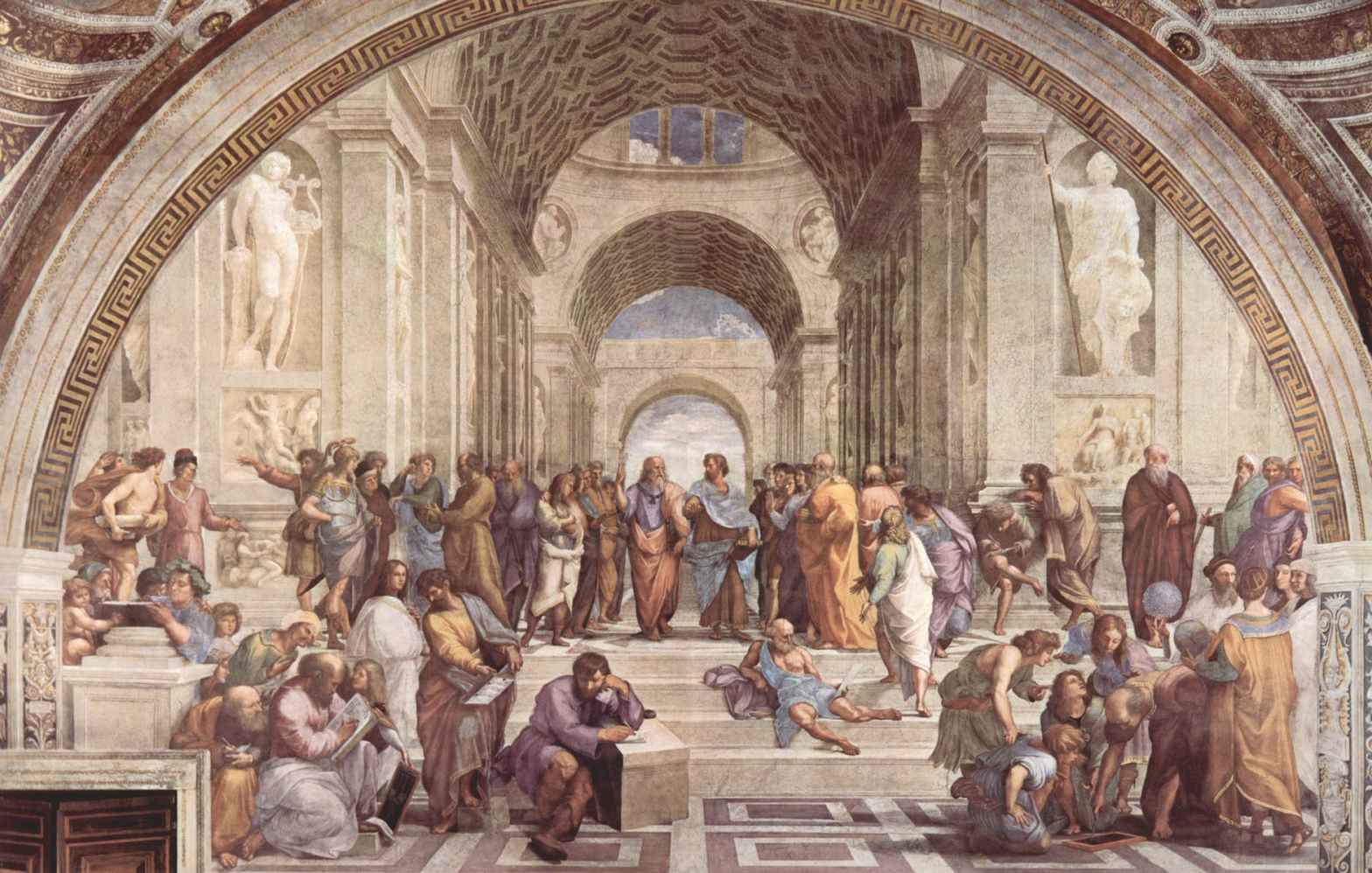
Background: In Plato’s dialogue, the Symposium, we observe key figures of Athens enjoying a meal and drink over conversation. Agathon then proposes that in honor of the god Love, each person shall give a speech in praise of Love. Plato’s dialogue explores each speech the members give ending with Socrates.
Phaedrus: Love is one of the most ancient gods. The proof of this is his great age and the fact that his parents are not recorded in poetry or legend. Because he is one of the oldest gods, Love gives one of the greatest goods. “There is a certain guidance each person needs for his whole life, if he is to live well.” There is no god that imparts such guidance as well as Love. The guidance that Love imparts is shame for acting shamefully, and a sense of pride in acting well. Additionally, no will die for you but a lover. Furthermore, “gods honor virtue most highly when it belongs to Love.” The gods are most impressed when it is a loved one who cherishes his loves, than the inverse.
Pausanias: There are two kinds of Love because there are two gods of Love. The first goddess of Love, Urania / Heavenly Aphrodite, is the oldest of the two gods. The second and younger goddess of Love is Pandemos / Common Aphrodite. Common Aphrodite is vulgar love that is concerned with the body as opposed to the soul. Moreover, “love in itself is neither honorable nor a disgrace – its character depends entirely on the behavior it gives rise to.” Those that worship Common Aphrodite are concerned with the fulfillment of sexual pleasure and therefore are dishonorable. However, those who worship the Heavenly Aphrodite are concerned with the soul and are thereby honorable.
Eryximachus: He frames the god of Love in terms of his profession, medicine, and agrees that there is two types of love. Love isn’t exclusive to humans. Rather, “it is a significantly broader phenomenon.” Love’s is the reconciliation between the Heavenly Love and Common Love. The heavenly Love is “felt by good people” and “must be encouraged and protected.” However, common love requires “extreme caution.” “We must be careful to enjoy his pleasures without slipping into debauchery.”
Aristophanes: Humans were separated from their other half by Zeus. “When a person meets the half that is his very own” “the two are struck from their senses by love.” Human souls long for their lover although “his soul cannot say what it is” but “has a sense of what it wants.” Ultimately, “‘Love’ is the name for our pursuit of wholeness, for our desire to be complete.”
Agathon: Love is the happiest, most beautiful, and youngest of all the gods. He resides in the souls of gods and men. However, he does not reside in every soul. Love only makes his home in soft souls as he is delicate. Additionally, Love is fluid. This is evidenced by his ability to “enfold a soul completely or escape notice when he first entered it or withdrew.” Moreover, Love “is neither the cause nor the victims of any injustice; he does no wrong to gods or men.” Love is also the bravest among the gods. He fills humans “with togetherness,” “drains all of our divisiveness,” and is a giver of kindness as opposed to meanness.
Socrates (or Diotima): Love is neither beautiful nor good. His character is that which lives in between that which is praised by men. As such, Love’s character is between understanding and ignorance. He is neither completely mortal or immortal. Rather, he is a spirit that acts as a messenger between the gods and men. Moreover, “Love must be a lover of wisdom.” However, there is an important distinction when men discuss love. “We divide out a special kind of love, and we refer to it be the word that means the whole – love.” The parts that compose the whole of love discussed are: “love and in love and lovers.” But with regards to the story Agathon mentioned, “a lover does not seek the half or the whole, unless, my friend, it turns out to be good.” So one can then say, “love is wanting to possess the good forever” and thereby desire immortality.
— Yours truly
Michael A. Westbrook
References:
- Reeve, C.D.C, editor. Plato on Love. Hackett Publishing Co., Inc., 2006.
 Ivory Tower